
‘Slacktivism’ is the Fault of the Campaign Architect
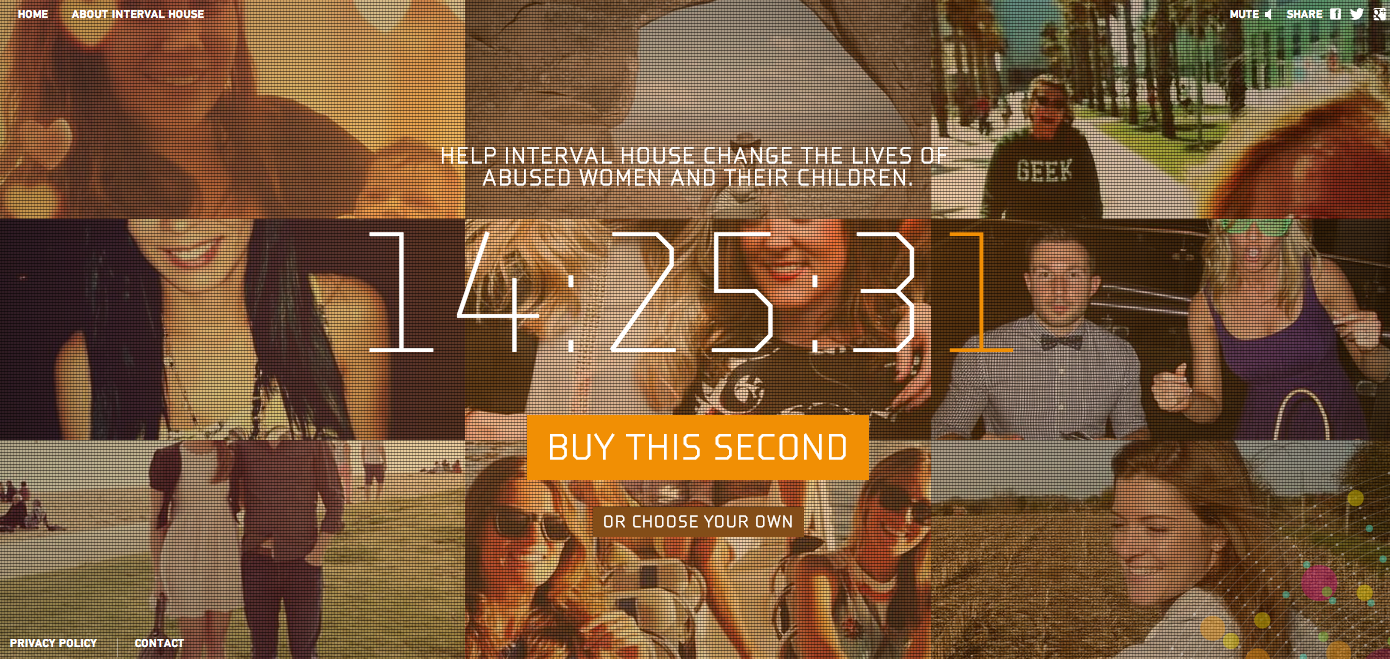
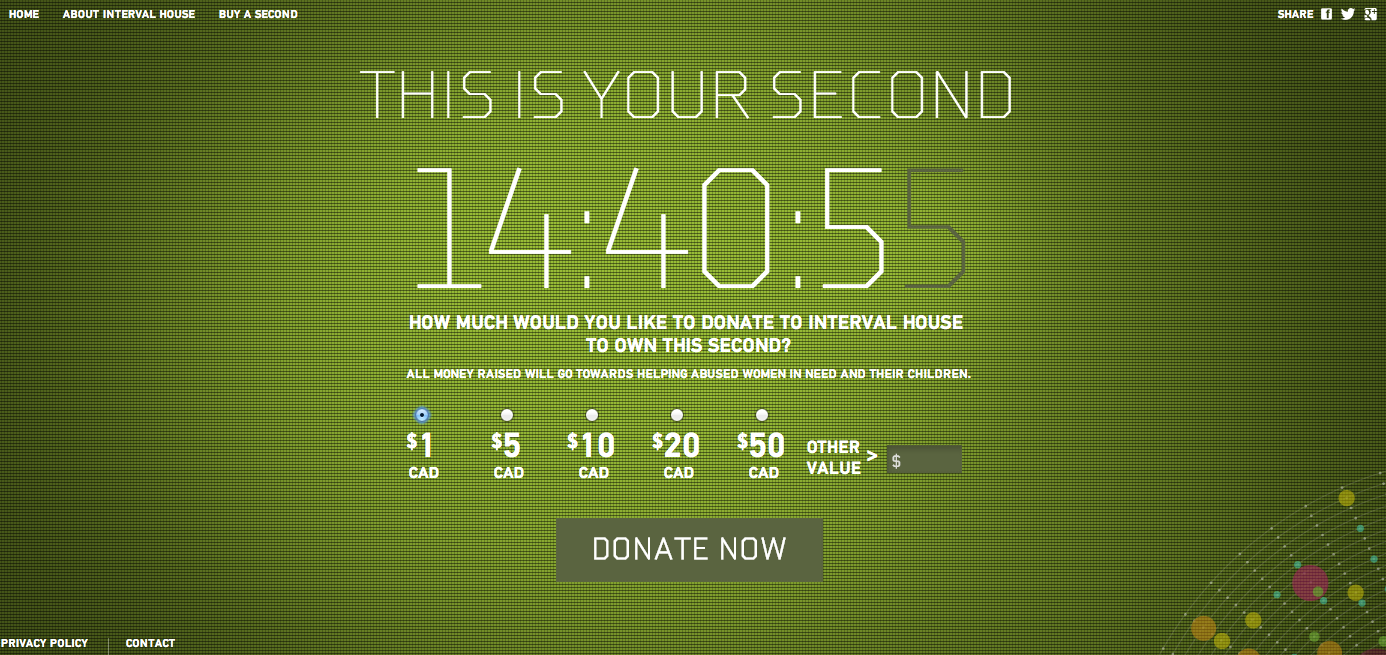
Today I came across a great online charity drive for Interval House Canada called Every Second Matters. The site pulls images of your female Facebook friends to illustrate that every second a Canadian woman is abused. It was ‘newswothy’, shareable, conveyed a powerful emotive message but I didn’t donate. Not because I didn’t want to, but because I couldn’t be bothered. After the Every Second Counts hook, the donate function was tacked on to the end. Enter your name, email, credit card details, address, – it’s painful even thinking about it. Here’s the thing, people do care, but just not that much.
And that’s the problem with most online charity drives. It’s not that people are ‘slacktivists’, it’s that the campaign architecture is flawed.
Until we’ve got a seamless one click solution to donate in this manner, the ‘create attention then ask to donate’ approach won’t work. And even if we did have that one click solution, it’s inefficient. The incentive to donate is weak. It relies only on the power of the initial message communicated up front.
So what should marketers be doing in 2013 when we don’t have a ‘ubiquitous one click solution” to donate?
Two things:
1. Look to increase motivation by building the act of donating inherently into the idea.
2. Increase motivation to donate by looking for ways we can make the act of donating as close to a one click solution as possible
- eg – Work with a corporate sponsor to make the payment on behalf of the customer – TabForACause.org
- eg- Look to create concepts involving places where our audience have already given their credit card details (Amazon, Spotify, Netflix, Cell Carriers) – Verizon’s Haiti drive is close but expect to see more of these style campaigns in the next year or two.