
Keith Richards and the New Agency Antenna
“People say they write songs, but in a way you’re more the medium. I feel like all the songs in the world are just floating around, it’s just a matter of like an antenna, of whatever you pick up.” – Keith Richards.

“I never sit down and say, time to write a song. Now I’m going to write. To me, that would be fatal.” – Keith Richards
Keith Richards has an interesting view on songwriting. He believes that “all the songs in the world are floating around”. He doesn’t create them. He channels them through his “antenna”. He’s the medium. Over the years, his antenna has become more receptive. He hears glimpses of songs more easily and more often, but has never or never will sit down to ‘catch’ them. He believes to do so “would be fatal.”
But what if you were employed to do so? And what if songs were becoming less effective at delivering your message and a whole new world of possible mediums had opened up?
This is the situation modern agencies are faced with.
Not only do we have to take the antenna and explore for solutions, which in Keith’s mind would be “fatal”, we now have to search for solutions in far greater areas.
If we choose to believe that the solution is “floating around”, then it’s our job to find it. And the only way we’ll find one that’s not “fatal” is to ensure that we’re receptive to the full spectrum of possible ideas beyond traditional advertising while making sure that our “antenna” is in full working order.
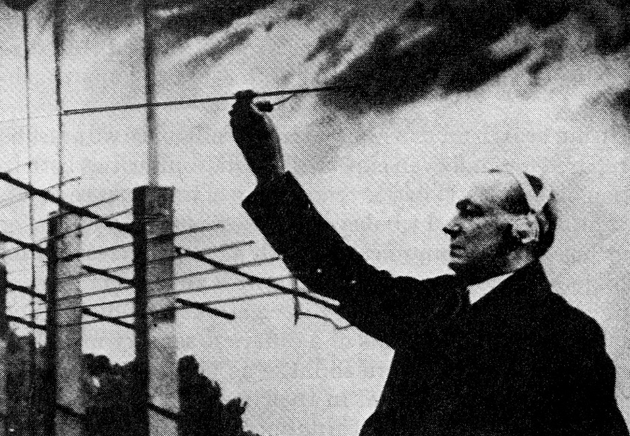
Upgrading the Antenna – The hardware
An antenna that only produces ads is an antenna only receptive to one channel. No matter where it’s pointed, if it’s not receptive to signals beyond a certain channel, it can never produce them.
The same is true in an agency.
The only way to create ideas beyond advertising is by having people receptive to ideas beyond advertising. And since an idea is simply a new combination of existing thoughts, increasing our receptivity is about broadening our scope. Having more of the right foundational inputs so we’re able to tackle a problem in its broadest sense.
For planners, this means moving out of the world of planning – which exists to inform what the advertising should be – and broadening their scope to the world of strategy – which exists to inform the need for advertising.
Such a shift requires broader receptivity. It requires the ability to take the antenna and scour the landscape for glimpses of solutions in disciplines spanning brand planning, comms planning and everything in between. And to be receptive to those glimpses, the updated strategist needs to have a strong underlying understanding in the mechanics of how the clients’ business works, how marketing and (modern) communications work and how human behavior works to be able to connect the dots back to the problem at hand.
It’s similar for creatives.
The best creatives have always been those who’ve had broad interests. In 1939, James Webb Young referred to them as “extensive browsers”. The difference now? The areas to browse or be ‘receptive’ to have not only become larger, but increasingly need to be viewed from a different perspective.
To keep up, not only do creatives need to be receptive to the opportunities inherent in the new tools and technology in the modern communications landscape, but also the shift from ‘saying things at people’ to ‘doing things for and with people’ requires receptivity usually reserved for commercial types – an understanding of the value exchange. As a result, many have suggested that the updated creatives need to become ‘creative strategists’ or that they remained specialized and be pulled together in multi-disciplinary teams receptive to the right signals depending on the problem at hand.
Of course, with both planners and creatives, an understanding of the broader areas will not be enough to ensure ideas don’t, as Keith says, turn out to “be fatal.” To push past this requires the best strategic and creative minds. These are minds that can connect glimpses from increasingly broad territories to find strategies and ideas that push past the mundane towards the extraordinary. Idea connections that live in the boundaries of “The Adjacent Possible” as popularised by Steven Johnson in his book Where Good Ideas Come From. This may come from individual people, but it’s perhaps more likely (and sustainable) to come from an agency that sets it’s antenna in such a manner through a culture that encourages it. One of learning, innovation, collaboration and excellence.
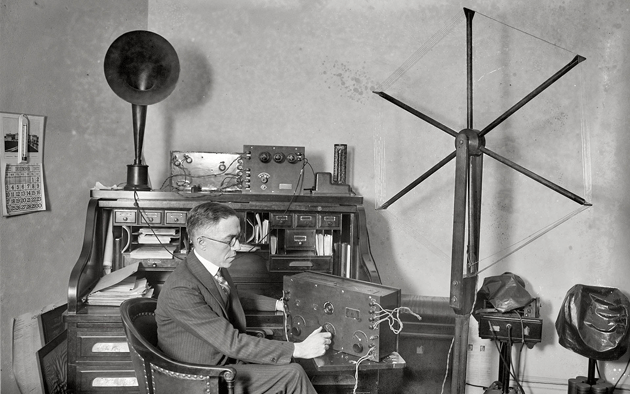
Upgrading the Antenna – The Tuning Process
A more receptive antenna is a more receptive Keith Richards. One able to hear a greater variety of glimpses but one still waiting for the glimpses to sound. Agencies don’t have this luxury. We need to pick up the (now upgraded) antenna and start waving it about to find solutions for our clients.
Anyone who’s tuned an old radio or TV knows this as a two-step process. You wave it about looking for the strongest signal area, then you set it down and move in to the fine tune dials.
There is, however, a third part. One that’s crucial, but not thought of: Knowing what you’re looking for and knowing when you’ve found it.
Unfortunately, the same thing occurs in agencies. No matter how receptive our strategists and creatives are to brilliant ‘non fatal’ solutions, if they don’t know what they’re looking for, they’ll never be able to find it.
This isn’t new, it’s something we’ve known for a long time:
“The greatest challenge to any thinker is stating the problem in a way that will allow a solution” – Bertrand Russell
“A well defined problem is half solved” – John Dewey
“The freedom of a tight brief” – Adland
Even though we know this, we’ve never taken it seriously. It’s because we never needed to.
In an age where the answer to most clients’ problems most likely was “more advertising” (as it was the only efficient way to influence people at scale), the solution we were looking for was half solved. We didn’t need to worry about what we were going to do, we only needed to worry about what we were going to say.
Now that everybody and everything can communicate, interact and influence at scale, it’s crucial to work out the most effective way to do so. And since being effective is simply the ability to deliver a desired goal, the key challenge (and why it’s crucial that strategists now have a broad underlying receptivity) is to be able to translate business goals into actionable marketing and behavioral objectives, something tangible for those swinging the antenna to pick up. A problem “that will allow a solution.”
And if knowing what success looks like is key, knowing when you’ve found it is just as crucial.
While we’ve always had an ECD as the custodian of the idea, when advertising isn’t necessarily the solution, who operates the antenna? Who recognizes when the problem has been framed correctly, the right ‘receptive’ team assembled and ultimately, the right solution found?
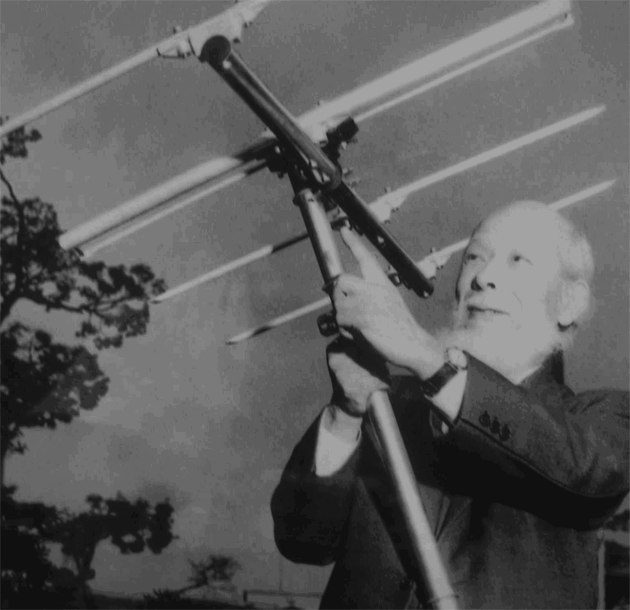
In the end, the person who operates the antenna is the most important person on the solution team. It could be anyone – a Creative Director, a Strategist, a Technologist or a Suit. The only thing that matters is that the person has a broad understanding and respect for how all the components of the antenna come together to work in the new landscape. These people, as well as those needed to upgrade the strategy and creative department, might be few and far between for the moment, but every day they’re not around, our solutions become more and more likely “to be fatal” for our clients.

How Band Management Shaped my Approach to Comms Strategy
“How many years agency experience have you had?”
This is the question that so many people’s entries, titles and salaries hinge on within the advertising industry. It’s also the question holding the industry back. Keeping us doing the same thing. Keeping us advertising, not marketing.
Before advertising, I used to manage bands.
Bands have two fundamental challenges facing them when it comes to promoting themselves.
1. They don’t have any cash, and
2. No one wants to hear new music unless it’s referred to them by a trusted source
These two challenges meant that I spent five years fumbling my way to an understanding on how to market from a position where attention couldn’t be bought.
The lessons I learned have since become instrumental in the way I approach communications strategy and as it turns out have become increasingly important in the era of diminishing returns on paid media.
Had I spent the same five years gaining “agency experience”, it’s likely I’d have a very different point of view.
Below are five lessons I learned whilst promoting bands that have shaped my comms beliefs today.
BAND LESSON 1
Editorial and accomplishments are more effective at promoting a band than advertising and can also be used in advertising to make it more effective.
There are two audiences for bands. The ‘punters’, who consume the product and the ‘gatekeepers’, like festival bookers and journalists, who help you get to the next level. Both audiences are won over by what ‘credible’ people are saying about the band and by what ‘credible’ things (festival billings, notable support acts, etc) a band has done.
We learned what we had to say about our music didn’t mean much. The best (and perhaps only) way to promote a band effectively, was by focusing our efforts on getting credible people to talk and by doing credible things. The more we got of one, the more we’d get of the other.
When it came time to promote an album, pitch a booker or promote a show, the achievements and quotes would became the basis of our promotion. We learned ‘advertising the review’, was more effective than ‘advertising the album’. It was real world proof.
Resulting Belief: Real world actions created by brands are more powerful than what a brand says.
Resulting Belief: The same real world actions can be used as the basis for advertising to make it more effective.
Resulting Belief: Brand messages are at their most powerful when they come from credible people (friends/media) not the brand.
BAND LESSON 2
If you want the media to write and the public to talk, pique their interest, then help them out with a story
Our marketing approach, get editorial then advertise the quotes, wasn’t unique. Most bands were chasing editorial. And editorial, as we discovered, was scarce.
To get journalists to write, we learned we first needed to get them to listen to our CD over the other thousand CD’s they’d been sent that week. We needed to pique their interest.
Then we learned we’d need to offer a reason over and above the music itself to help motivate the journalist to write about us and not the other 10 great bands they’d heard that week. We figured, if we could help them out with an interesting, additional angle then we’d be more of an attractive offer.
With Melbourne Band Big Scary, one of the ways we put this into action was with their debut LP release. Instead of releasing an album, we cut it into four EPs, Summer, Autumn, Winter and Spring each containing music written about the season. We piqued the media’s initial interest by sending personalized, hand stitched canvas press kits at the start of each season, then ‘helped them out with a story’ with our four seasons concept.
Resulting Belief: People will talk/write about any brand so long as you give them a reason to.
Resulting Belief: Seeding a good idea is just as important as a good idea. If it’s never seen, it never has the potential to gain momentum.
BAND LESSON 3
There is no blanket approach to market a show. Each town is different.
When you need to market a national tour of 50 towns, it’s tempting to market one show and replicate for the remainder. We found out the hard way that every town is different and requires a different approach.
If you wanted to get people to a show in Byron Bay then you needed to understand that the crowd were transient backpackers. The industry standard, “two posters and a gig guide ad two weeks out” would be money wasted. Living on $30 a day each, we couldn’t afford a single wasted ad.
We learned the best approach in Byron Bay was to pay young backpackers to hit people up with flyers on the day of the show.
Resulting Belief: There is never a blanket approach to comms planning, but that doesn’t mean it’s hard. It just needs to be thought through logically. Who are we targeting, where are they, what’s going through their head?
BAND LESSON 4
Every time your audience comes into contact with you, you have an opportunity to build the band.
When faced with little to no radio support, you learn to make every interaction you have with an audience count. No matter whether it was a show, an interview, an ad, a sale or even a conversation. If somebody came into contact with us, we wanted to make sure we had done everything we could to help that person remember who we were and everything we could to motivate and make it easy for them to get to the next show or tell a friend about us.
The discipline manifested itself in numerous simple things (especially before the social media boom).
We’d ensure our name and logo were clear at shows and at all touchpoints, we’d send out an extra CD for people to share when they’d only ordered one, we’d arm every audience member with stickers to plaster around town afterwards and we’d constantly collect email addresses by doing things like exchanging them for free downloads.
Resulting Belief: Every interaction a brand has with a consumer is an opportunity to achieve a business goal and should be carefully crafted to do so.
Resulting Belief: Real scale and efficiency in communications is achieved when comms ecosystems are designed to self propagate when people interact with touch points. Paid media (and any other point of entry) should be viewed as a fuel.
Resulting Belief: The brand should strive to be instantly recognizable in all comms
BAND LESSON 5
If the music sucks, it’s all in vain. Or worse.
Ultimately, we learned that no matter how good a band was at promotion be it with money or without, if the music didn’t resonate, then the promotion was at best wasted or at worst harmful.
With one band, De Jah Groove, despite having a terrible name, we were hitting home runs on the promotional front for our last album. We’d garnered TV appearances, Rolling Stone reviews, Triple J interviews, some great festival bills and a whole lot more ‘credible things’ we would have wished for in the past.
However, our best promotion to date generated our worst results. Little airplay, smaller crowds, lower CD sales and harmful reviews.
We had neglected the product. We’d put out an album with lots of re-recordings of old tunes and the fans (rightly) grew tired. By promoting a neglected product we’d in fact harmed our reputation.
Resulting Belief: Getting the product right is the most important thing a marketer can do. If it’s not right, then promoting it could be at best wasteful and at worst harmful.
Shout out to Adam Ferrier, Matt Houltham, Kimberlee Wells, Dave Whittle and Julian Cole for seeing past my own lack of agency experience a few years back.
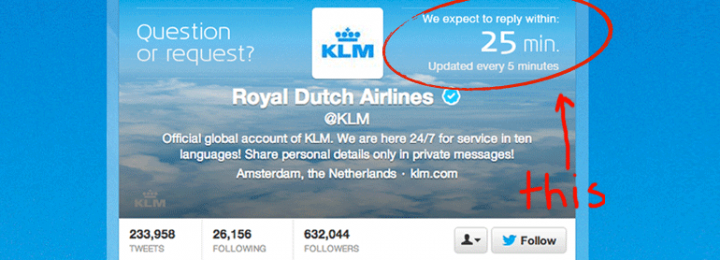
KLM Implement Old ‘Psychology of Waiting’ Trick in New Twitter Tactic
We all hate long wait times. But there’s one thing worse. Not knowing how long you’ll have to wait. Good call centre’s know this. It’s the reason you’re told the expected wait time at the start of your call. Phil Bardon in Decoded – The Science Behind Why We Buy also knows this. He refers to the practice as “reducing perceived wait times” by “reducing uncertainty”.
It appears however, that social media customer service teams didn’t know this. Or perhaps, didn’t know how to implement this. That is, until some smart cookies at KLM airlines last week began updating their twitter profile picture with estimated wait times every five minutes.
It’s a smart move by KLM.
Not only is reducing perceived wait times in this manner far cheaper than hiring additional staff, it’s arguably more effective. Bardon sums it up:
“We’re happier to wait 9 minutes for a train if we know that it will arrive in 9 minutes than we are to wait for five minutes not knowing when the next train will arrive.”
Brands have been using social as a customer service channel for some time now. It’s curious given how nervous everyone’s been about vocal customers with keyboards that the tactic has taken so long to come about. You’d think they’d be pulling out all the tricks. Especially an old one like this.

‘Slacktivism’ is the Fault of the Campaign Architect
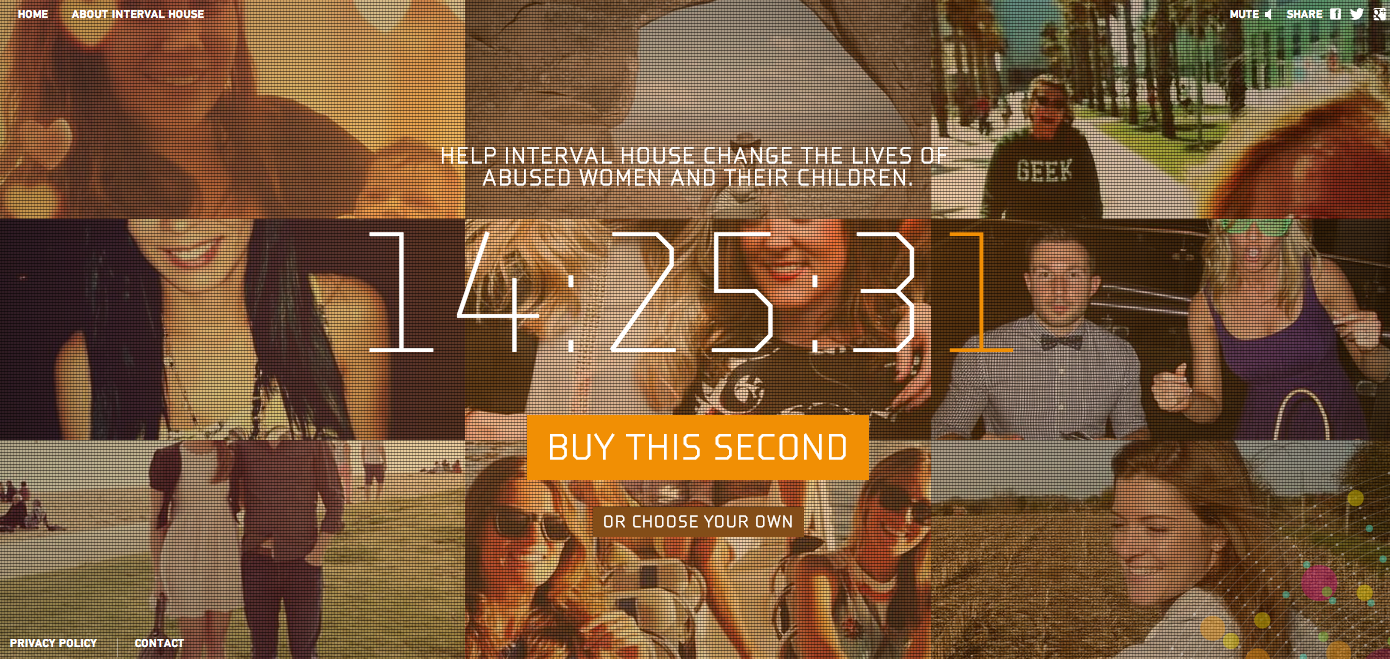
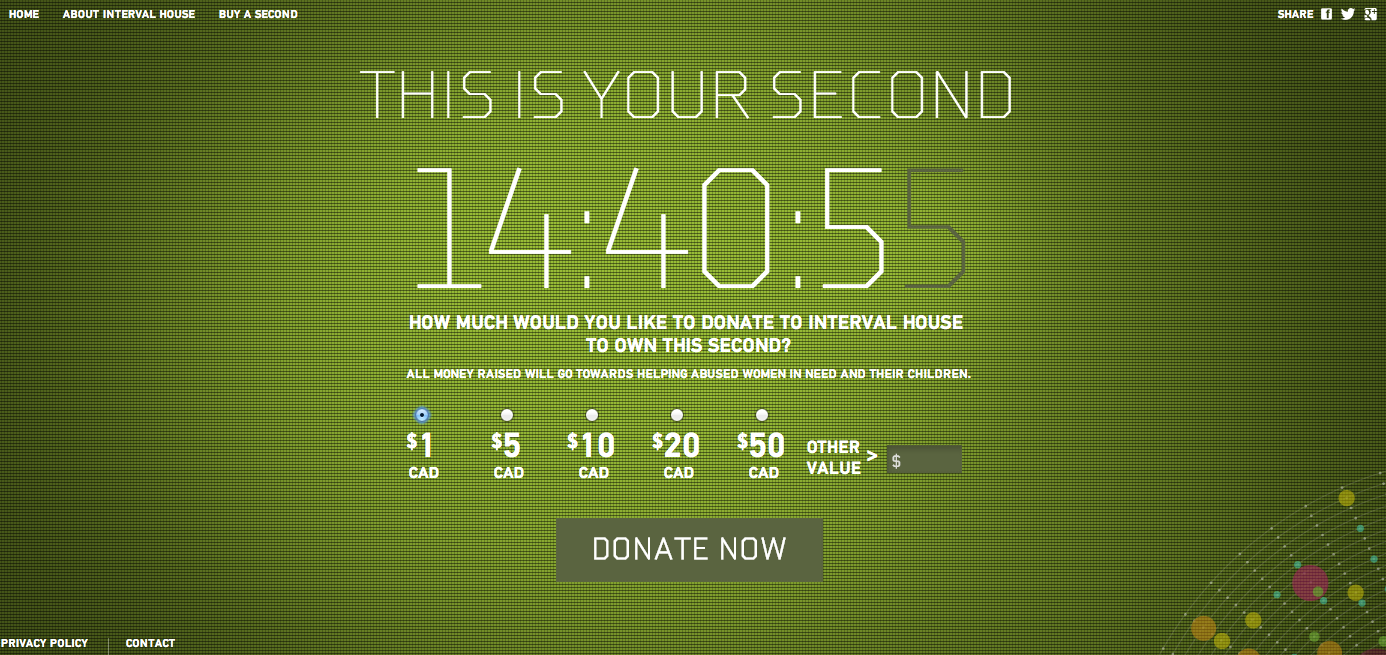
Today I came across a great online charity drive for Interval House Canada called Every Second Matters. The site pulls images of your female Facebook friends to illustrate that every second a Canadian woman is abused. It was ‘newswothy’, shareable, conveyed a powerful emotive message but I didn’t donate. Not because I didn’t want to, but because I couldn’t be bothered. After the Every Second Counts hook, the donate function was tacked on to the end. Enter your name, email, credit card details, address, – it’s painful even thinking about it. Here’s the thing, people do care, but just not that much.
And that’s the problem with most online charity drives. It’s not that people are ‘slacktivists’, it’s that the campaign architecture is flawed.
Until we’ve got a seamless one click solution to donate in this manner, the ‘create attention then ask to donate’ approach won’t work. And even if we did have that one click solution, it’s inefficient. The incentive to donate is weak. It relies only on the power of the initial message communicated up front.
So what should marketers be doing in 2013 when we don’t have a ‘ubiquitous one click solution” to donate?
Two things:
1. Look to increase motivation by building the act of donating inherently into the idea.
2. Increase motivation to donate by looking for ways we can make the act of donating as close to a one click solution as possible
- eg – Work with a corporate sponsor to make the payment on behalf of the customer – TabForACause.org
- eg- Look to create concepts involving places where our audience have already given their credit card details (Amazon, Spotify, Netflix, Cell Carriers) – Verizon’s Haiti drive is close but expect to see more of these style campaigns in the next year or two.
#MomaNapkin, Share a Coke and Sustainable ‘Talkability’
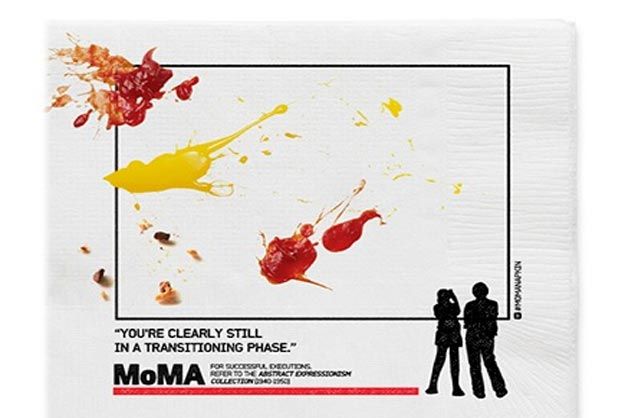
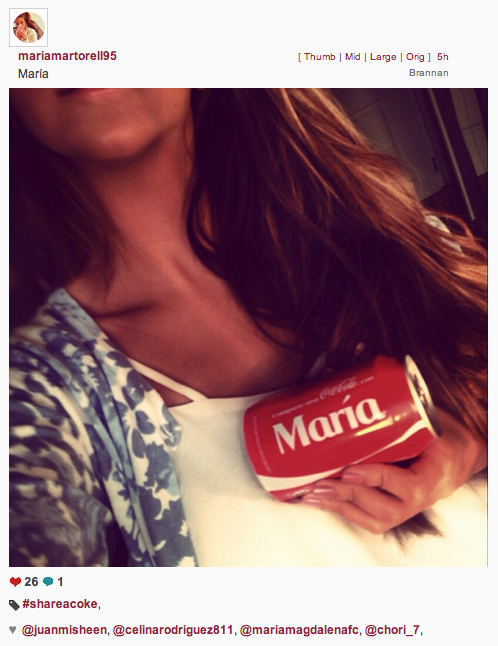
It’s one thing to come up with an idea that generates ‘talkability’. It’s another to come up with an idea that creates ‘sustainable’ or ‘continual’ talkability. Coca Cola cracked it with Share a Coke, a new photo opportunity and person to tag with every purchase, the clever students at Miami Ad School have cracked it with the #MomaNapkin concept, a new reason to snap a photo after every meal.
If You Don’t Know ‘What’s Possible’ You’re Limiting or Killing Creative
Sometimes you see an idea and think, “I wish I’d thought of that”. Other times you see an idea and think, “why didn’t X brand think of that?”. Then, there are times you see an idea and think, “I didn’t even know that was possible”. These are the important ones. The reason to make the time to keep up in this game.
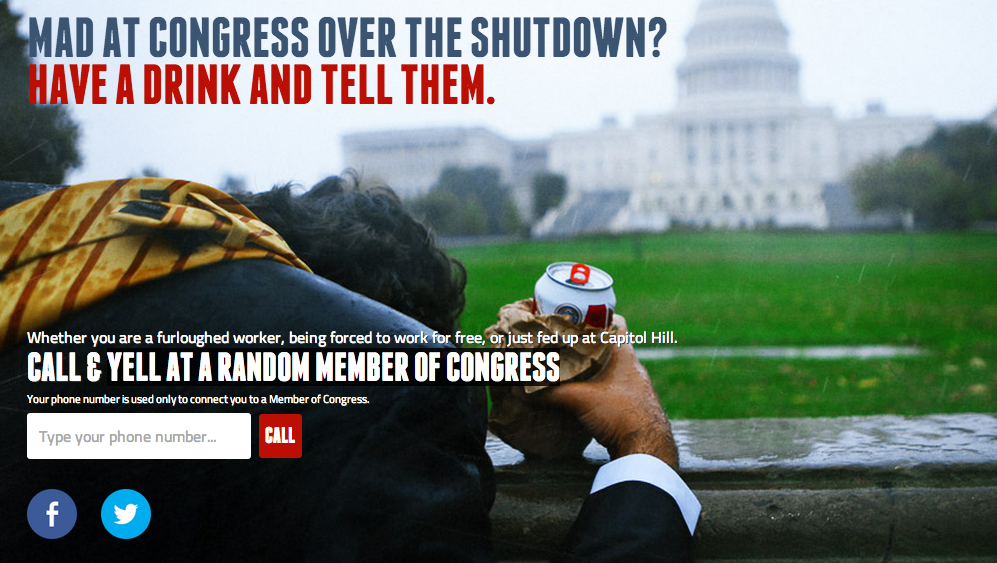
This week, like many, I read about drunkdialcongress.com – a site that prompts you to “call and yell at a random member of congress” to voice your frustrations about the government shutdown.
I checked it out.
The creative hook was first class (wish I’d thought of that), but the mechanism that enabled you to carry out the ‘drunk call’ got me really excited – I didn’t even know it was possible.
The site asks you to enter your phone number to make the call and within seconds of doing so your phone rings and you’re connected to the member of congress.
As marketers, we’re in the business of getting people to change their behavior. Getting people to take out their phone and make a call to their government representative is a big ask. In fact, it’s a such a big ask, if it had come up as a behavioral goal of a campaign I was working on I may have dismissed it and looked for something easier to get people to do.
Now I wouldn’t.
Technology that enables a site to make the call for you – on your phone – in just one click – is a massive step towards eliminating the complexity of that task.
We’re writing the new rules of how to market in a constantly connected world. The tools and technology available to us to carry out our craft are changing everyday. If you’re not keeping up, you don’t know what’s possible. If you don’t know what’s possible, you could be limiting the effectiveness of ideas, or worse, killing off potentially great ideas.
SpiceJet Airlines, The Overstay Checkout and Creating Value out of Nothing
Last year I was fortunate enough to be involved in the campaign that won the WARC Global Prize for Innovation – The Overstay Checkout for Art Series Hotels.
It was a great idea. Guests could stay free in their room until the next guest booked into their room arrived. This meant that people could stay free for a few hours, another night or even a whole week. It all centered around hotel capacity.
One of the questions we had to answer when writing the WARC award entry was on our definition of innovation and why we thought that our idea was innovative. Adam Ferrier (Naked Founder and Global Head of Behavioural Science – BS) and I came up with the following to introduce the section:
Genuine innovation in a marketing sense means creating something new that in-turn creates additional shared value, giving both the consumer greater satisfaction and the marketer increased profitability. To be able to achieve this via genuine product innovation without any additional costs is extremely rare.
By doing nothing but reframing existing resources the Overstay Checkout (amongst other things) did the following:
1. Created an added incentive to book a night
2. Created significant media and WOM interest
3. Created additional revenue from guests staying on using hotel facilities, and most importantly
4. Solved the problem of what hotels should do with unused inventory
What I loved about the Overstay Checkout was how obvious it was in hindsight. Unused rooms and customer grievances about check out times had been staring us in the face forever.
This week I learned how India’s SpiceJet airline have also created ‘value out of nothing’. They’ve introduced a product they call the Extra Seat Option (ESO) which allows people to pay a small amount for the added comfort of sitting next to an empty seat rather than leave it to chance.
When purchasing tickets, customers can elect to pay for the ESO and if there are any extra seats available on the day of the flight, they’ll be seated next to it. If not, then their money is refunded.
Like the Overstay Checkout, SpiritJet’s offer provides value on multiple fronts and does so by simply reframing the assets they have available to them at no additional cost to the airline.
As traditional forms of advertising become less effective and less efficient, marketers should be looking for solutions to client’s problems in a large spectrum of areas. Looking at the product should be amongst the first. I wonder how many more of these are out there?

American Express and TripAdvisor Partnership – Smart For All Involved
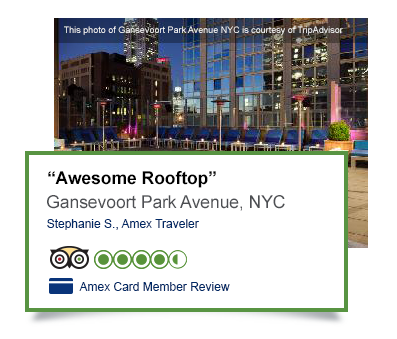
It’s good for all involved. That’s when you know you’ve got a partnered promotion/program that will work. Amex and TripAdvisor have just launched one. Amex customers can login to a special portal of TripAdvisor where they can collect rewards for reviewing places they have actually used their card at. It’s all laid out in front of them, ready to write, ready to collect. The result? The Amex ‘reward hungry’ customer is happy (rewards are a massive deal in the US) and Amex is now a more attractive offer.
The reviews have a special Amex logo that lives next to them on TripAdvisor that acts as a qualifier that the reviewer has actually been there. The result? TripAdvisor and TripAdvisor customers are happy with increased quality of comments, American Express are happy with increased impressions and ‘luxury’ brand positioning.
It’s smart, but it’s not perfect. Once TripAdvisor can add the badge next to comments more seamlessly (without having to login to a separate portal) that’s when you’ve got a real win.
“The World’s First Really Live Feed” – My god what a ‘really’ wasted opportunity
I love a live webcam stunt. Especially ones that are interactive. You’re almost guaranteed a base level of PR and interest. Good examples – The Most Powerful Arm Ever Invented by Reactive, or The Comunitree by Scentsicles. This week I came across the campaign “The World’s First Really Live Feed” for Compassion in World Farming (CIWF). The idea? Remotely catapult apples into a free range pig pen to see the positive effects of free range farming in real time. A great idea that would no doubt garner significant media and WOM interest. However, it never had the chance to.
For some odd reason the campaign was executed by one interactive digital billboard outside a shopping centre limiting the “live feed” to those who happened to be there. Worse yet, people who wanted to get involved had to download an app then enter credit card details to pay $1 to throw the apple. No surprise the campaign case study showed that (only) “500 apples” were thrown in five days ($500 raised…) and was only seen by 100,000 people. I cannot fathom the waste here. Obviously this campaign could have been a roaring success if built around a live socially engineered web experience at $1 per throw. I assume the infrastructure still exists. Can somebody put me in touch with them? I, as I’m sure many others would happily design and relaunch this (pun intended) pro bono. It needs to happen.